

The complete industrial shelving specification guide
Choosing the right industrial shelving is an important decision that directly impacts warehouse safety, operational workflow, and your bottom line. An incorrect choice can lead to wasted space, damaged inventory, and serious safety hazards. Specifying the correct system from the start is essential for creating a productive and secure environment.
This guide provides a practical, step-by-step framework for facility managers, warehouse operators, and procurement professionals to confidently specify the correct industrial steel shelving for any application. As America’s leading steel storage manufacturer since 1901, we have the expertise to help you make an informed decision that pays dividends for years to come.
In this guide, you will learn how to assess your unique storage needs, decode technical specifications, ensure safety compliance, and avoid common, costly mistakes.
Part 1: the pre-specification audit: answering the 3 core questions
Before you look at a single product, a thorough assessment of your needs will prevent costly errors and ensure you design a great storage system. This essential planning phase is the foundation of a successful project.
1. What are you storing? (inventory analysis)

The first step is to perform a detailed analysis of the items you need to store. The physical characteristics of your inventory will determine the type and capacity of the shelving you require.
- Size & shape: Measure the dimensions (length, width, height) of the boxes, bins, or individual parts you plan to store. Are they uniform, or do they vary in size? This will help you determine the required shelf depth and width. Make special considerations for any irregularly shaped or exceptionally long items that may require specific storage solutions.
- Weight: Determine the average and maximum weight of a single item or a fully loaded container. This information is essential for calculating the shelf capacity needed to prevent overloading.
- Type: Consider the nature of your inventory. Are you managing bulk storage, organizing small parts in a tool crib, storing liquids, or handling sensitive electronic components? The type of item will connect directly to the best shelving solution.
- Velocity: How often is the inventory accessed? High-turnover items that are picked frequently should be stored on more accessible shelving systems to improve workflow efficiency.
To simplify this process, you can create a basic inventory checklist with columns for Item Type, Dimensions, Weight, and Access Frequency.
2. Where are you storing it? (facility & space evaluation)
Next, you need to carefully evaluate the physical space where the shelving will be installed. Accurate measurements are non-negotiable for a successful layout.
- Available footprint: Measure the total square footage dedicated to the storage area (Width x Depth).
- Vertical height: Determine the clear ceiling height. You must measure from the floor to the lowest overhead obstruction, which could be sprinkler heads, lighting fixtures or ductwork.
- Aisle space requirements: The width of your aisles is key for safe and efficient access. Factor in the turning radius of any equipment you use, such as forklifts, pallet jacks, or service carts. A clear, unobstructed aisle is vital for operational safety.
- Floor condition & capacity: Verify that your concrete floor is level and can withstand the total weight of the fully loaded shelving system. An uneven or underrated floor can create a serious stability risk.
- Obstructions: Map out the location of any columns, support beams, doorways, and utility access points that could interfere with the shelving layout.
- Environmental factors: It is also a good idea to consider factors like humidity or exposure to chemicals as this can impact the finish and long-term durability of the shelving.
3. How will you use it? (workflow & application mapping)

Finally, you must connect your shelving choice to your day-to-day operations. How your team interacts with the storage system is just as important as what you store in it.
- Picking method: Will inventory be hand-picked by personnel walking the aisles, or will you use forklifts and other machinery? The picking method directly influences aisle width and shelving height requirements. Don’t forget the “last mile” of storage – how items are physically placed onto and retrieved from the shelf. For high shelves, are ladders or mobile lifts needed? Ensure there is adequate room for them to operate safely.
- Application: Determine the primary function of the storage area. Is it for long-term bulk storage, high-density small parts organization, or a temporary staging area for shipping and receiving? Each application has an ideal shelving solution. For example, for small parts organization in manufacturing or automotive tool cribs, Lyon’s bin shelving offers a high-density solution.
- Scalability: Consider your future growth. Will your storage needs increase in the next few years? Planning for scalability by choosing a modular system that can be easily expanded or reconfigured can save significant costs and disruption down the line.
- Environment: Lyon’s strong steel shelving is designed and manufactured for indoor, dry applications common in warehouses, manufacturing facilities, and distribution centers.
Part 2: decoding the specifications: from steel gauge to load capacity
Once you have completed your audit, you are ready to evaluate the technical specifications of different shelving systems. Understanding this terminology will allow you to compare products effectively and choose a system that is both safe and durable.
Types of industrial steel shelving: matching the form to the function
Different shelving designs serve different purposes. Selecting the correct type is key to improving your storage.
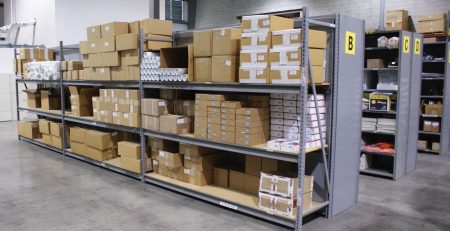
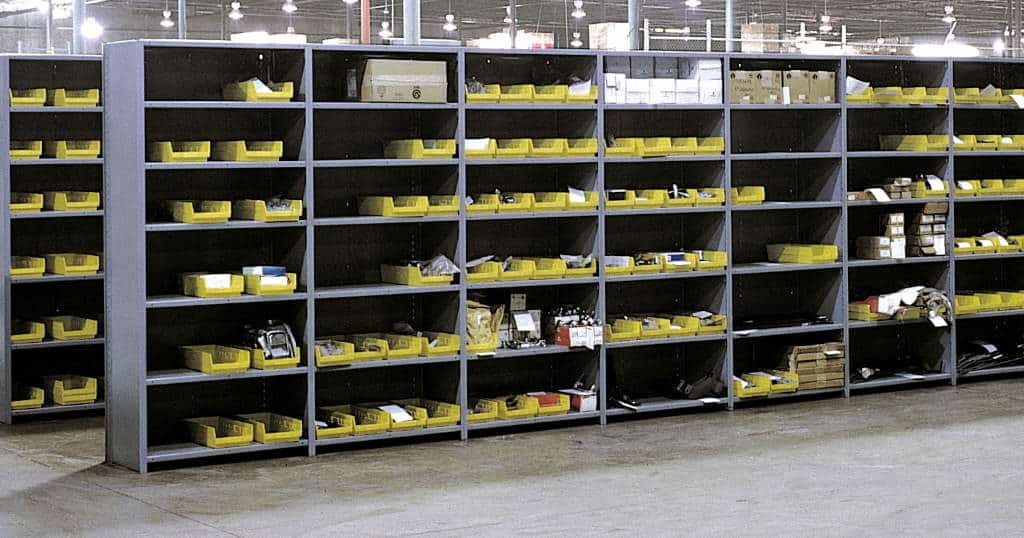
- Open shelving (exposed bracing): With open sides and back, Open Shelving provides excellent visibility and airflow. It is a cost-effective and versatile solution ideal for general-purpose storage and bulk inventory where items are easily identifiable.
- Closed shelving (solid backs & sides): Enclosed with steel panels, Closed Shelving offers greater product protection from dust and debris. The solid construction provides better stability and helps create clearly defined, organized storage areas, making it perfect for storing smaller parts.
- Bin shelving: This is a specialized, high-density system designed to efficiently organize small components, hardware, and fasteners. Bin Shelving is a necessary solution for tool cribs, maintenance departments, and assembly lines.
- Mobile aisle shelving: For applications where storage density is the top priority, Mobile Aisle Systems are unparalleled. By mounting shelving units on movable carriages, you can eliminate fixed aisles and dramatically increase the storage capacity of a given footprint.
Load capacity: the most important safety specification
Understanding load capacity is non-negotiable for preventing equipment failure and ensuring a safe work environment. Capacity is not a single number and you must always evaluate it correctly.
- Shelf capacity: This is the maximum uniformly distributed load (UDL) that a single shelf can safely hold. A UDL means the weight is spread evenly across the entire surface of the shelf, not concentrated in one spot.
- Total unit capacity: This is the maximum load the entire shelving unit, including all shelves, can hold. You have to remember that this is not simply the sum of all individual shelf capacities. Always verify and respect the total unit capacity to ensure structural integrity.
- Static vs. Dynamic loads: It’s important to understand the difference between these two forces. A static load is the weight of stationary, unmoving items on the shelves. A dynamic load refers to the additional stresses and forces placed on the system by moving items, such as when loading or unloading with a forklift. The system must be engineered to handle both safely.
As a best practice, we recommend loading the heaviest items on the bottom shelves. This creates a low center of gravity and improves the overall stability of the unit.
Material & construction: what “built to last” really means
The quality of the materials and construction determines the longevity and durability of your shelving system.
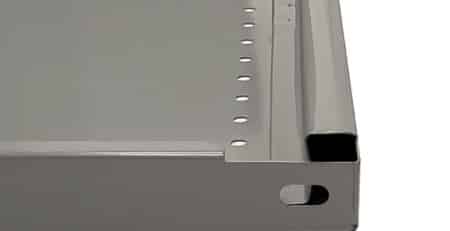
- Steel gauge: This refers to the thickness of the steel. In the world of steel, a lower gauge number means thicker, stronger steel. For example, a heavy-duty upright post might be made from 14-gauge steel, while a standard shelf could be 20-gauge. However, when evaluating steel, also look at the roll-forming process. A well-designed, expertly roll-formed component can be stronger than a thicker piece of poorly formed steel. This is where engineering and manufacturing quality truly come into play.
- Components: A typical shelving unit consists of vertical uprights (or posts), horizontal shelves, and either back or side bracing. Each component is engineered to work together to create a strong and rigid assembly.
- Finish: To withstand tough industrial environments, Lyon shelving features a durable powder coat paint finish. This finish resists scratches, chipping, and corrosion far better than standard liquid paint, ensuring a long service life.
All Lyon products are built to last and are backed by our lifetime warranty.
Part 3: safety & compliance: your non-negotiable checklist

Implementing a new storage system is a big investment in both capital and safety. Following established standards is not optional – it is a basic responsibility of every facility manager.
Decoding the standards: ANSI & OSHA in plain English
Navigating industry regulations can be complex, but their purpose is simple: to keep people safe.
- ANSI MH16.1: This standard from the American National Standards Institute provides the technical design specifications for industrial steel storage racks. What this means for you is ensuring the system you purchase was designed and tested by the manufacturer to meet this rigorous standard.
- OSHA: The Occupational Safety and Health Administration focuses on workplace safety. OSHA doesn’t design racks, but it does require that employers keep storage systems in good condition, not overloaded, and properly maintained to prevent workplace accidents.
Anchoring, bracing, and stability essentials
A fully loaded shelving unit can be a tremendous amount of weight. Proper installation is vital to prevent a tipping hazard.
- Anchoring: We recommend properly anchoring all shelving units to the floor and/or wall to ensure stability. This is especially important for tall units or units with a high height-to-depth ratio.
- Bracing: On open-style shelving, cross-bracing (on the back and sides) provides key lateral stability to prevent swaying. For closed units, the solid steel panels perform this function.
- Load capacity labels: Load capacity plaques or labels should be clearly visible on each shelving unit, stating the maximum permissible load per shelf and per unit. This is a strong OSHA recommendation and is critical for operator safety, providing a constant visual reminder to prevent overloading.
- Seismic considerations: If your facility is in a designated seismic zone, you must consult local building codes. You will need to specify a shelving system with seismic-rated engineering to withstand potential ground motion.
Part 4: the lyon process: from specification to installation
Bringing all this information together can feel overwhelming, but a structured process makes it manageable. Lyon is here to help you move from planning to a fully implemented solution.
Your action plan: the industrial shelving specification checklist
Use this checklist to ensure you have covered all the important steps in the specification process.
Evaluate your space
- Floor space and clear vertical height measured
- Overhead and floor-level obstructions mapped
- Aisle width requirements confirmed for personnel and equipment
- Local seismic zone requirements checked
- Floor condition and load rating verified
- Environmental factors (humidity, chemicals) assessed
Evaluate your items and shelving
- Inventory dimensions (L x W x H) and weight recorded
- Shelving type selected (Open, Closed, Bin, etc.)
- Single row or back-to-back shelving
- Required shelf and total unit capacity calculated
- Additional accessories (closed base strips, shelf dividers, label holders, etc.)
- Primary application and future growth needs determined
For a convenient, portable version, you can download this specification checklist as a PDF.
5 common (and costly) specification mistakes to avoid
With over a century of experience with creating storage solutions, Lyon has identified the most common errors that can compromise a storage system.
- Underestimating future needs: Specifying a system that only meets today’s needs can lead to costly expansions or replacements as your business grows.
- Ignoring aisle space: Selecting shelves that are too deep for your footprint can create narrow, inefficient, or unsafe aisles that choke off forklift and personnel access.
- Confusing shelf vs. unit capacity: Overloading individual shelves is dangerous, but exceeding the total unit capacity can lead to a complete structural collapse.
- Neglecting floor anchoring: Unanchored or improperly anchored units, especially tall ones, pose a serious tipping hazard to your employees.
- Choosing the wrong system for the application: Using light-duty shelving for heavy industrial parts or open shelving for tiny components that require containment leads to inefficiency and safety risks.
Installation & long-term maintenance
Proper assembly and ongoing care are key to maximizing the life and safety of your investment.
- Installation: Correct assembly is essential for ensuring the stability and load-bearing capacity of your shelving. While Lyon does not provide direct installation services, our nationwide network of expert distributors can manage the entire process for you, from layout design to final assembly.
- Maintenance: Lyon steel shelving is built to last, but regular inspections are a key part of any warehouse safety program. You should create a documented inspection schedule to routinely check for damage (dents, scrapes, bent posts from forklift impacts), loose anchors, and any signs of overloading. Any damaged components should be immediately and safely unloaded, cordoned off, and replaced by qualified personnel to maintain the system’s structural integrity.
Our lifetime warranty is our promise to you – a testament to the quality, durability, and long-term value of our products.
Put our expertise to work for you
A successful, efficient, and safe industrial shelving system starts with a smart and careful specification process. By carefully assessing your inventory, space, and workflow, you can design a solution that serves your facility for decades.
With over 125 years of experience, top-tier quality, and a commitment to customer service, Lyon has the products and the people to help you get the job done right. We have thousands of items in stock and ready to ship from our three domestic plants.
Have questions or are you ready to design your storage solution? Send us a Quote Request and one of our 20+ solutions experts nationwide will be happy to assist.